The EsF CoRE Practitioners Initiative has commenced in Hoshiarpur district, India. Dipa Sreekumar is a CoRE leader working with practitioners and facilitators on the ground. Below, you can find her (edited) account of how the initiative started, what work has been done, and what lies ahead.
When I was approached to be the CoRE leader for the CoRE Practitioners initiative, I did not realise the intensity and value of this program. I had assumed it would be similar to a diploma program but without the many requirements for certification. Although I completed the CoRE training programme in 2024, I did not fully understand it. The open ended nature of the program which did not provide clear schedules and guidelines was at odds with my personality, where I require structure and predictability. It took the patient explanations of fellow project members, Uma and Helen, to clarify my concerns and doubts. The programme enlightened me on the idea that the needs of every community are different and therefore we need to approach each program accordingly.
This CoRE initiative started when Ms Aashika Jain, the Deputy Commissioner of Hoshiarpur, seeing the impact of Montessori environment on her son, wanted to extend this philosophy to children of Hoshiarpur. Meenu Sahi, Executive Director of Vivek High Montessori Institute extended her support and took up the project to support 50 environments to convert into Montessori prepared environments. She convinced 10 of her teachers to volunteer as facilitators for this project. The volunteer team’s dedication, enthusiasm, and commitment were what gave me the support I needed to run the first module with ease. The project was then handed over to the Red Cross Society, Hoshiarpur and funded by a company called Quantum Papers as part of their Corporate Social Responsibility (CSR). Initially, the program was intended to begin in September 2025, but got delayed due to the various reasons.
Before the programme started Uma and Helen helped me with planning and organising the execution of the schedule. While I did not have full clarity at that point, Helen told me that the more I delivered, the more I would understand how to go about it. I chose to trust my knowledge of Montessori philosophy and the experience I had garnered through my mentors, Rukmini Ramachandran and Teenaz Reporter, and my previous courses.
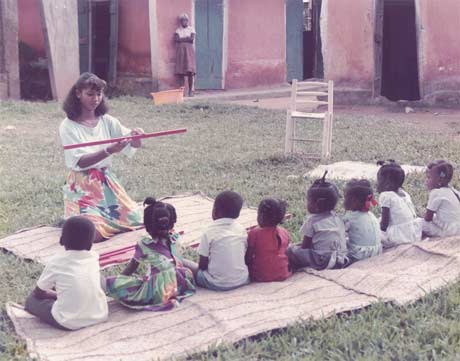
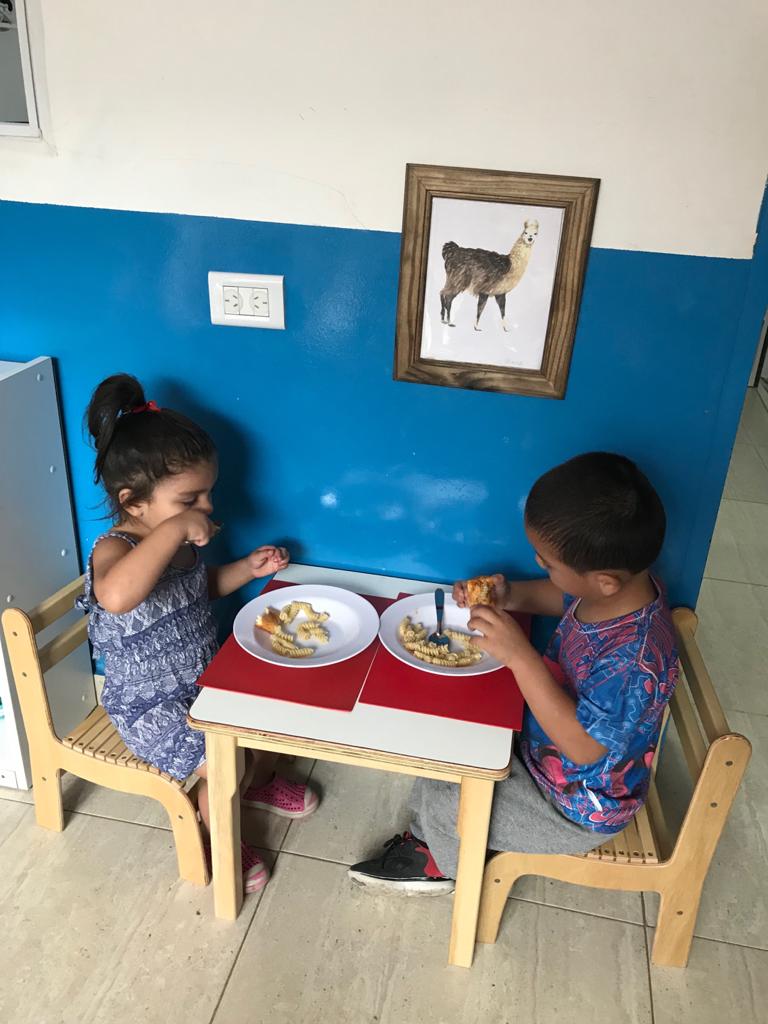
Before the module, Meenu and I visited a few Aanganwadi centres and pre-primary classrooms to observe and understand their daily routine and functioning. We noticed that the children were made to sit on small uncomfortable chairs or on the floor for almost 3 hours. The very few available toys were broken or incomplete and even those incomplete sets were shared between three to four children. There was no structure or routine and teachers mechanically followed the curriculum sent to their phones. The classroom lacked order and maintenance. It was then that I realised the magnanimity of the responsibility that I was taking up.
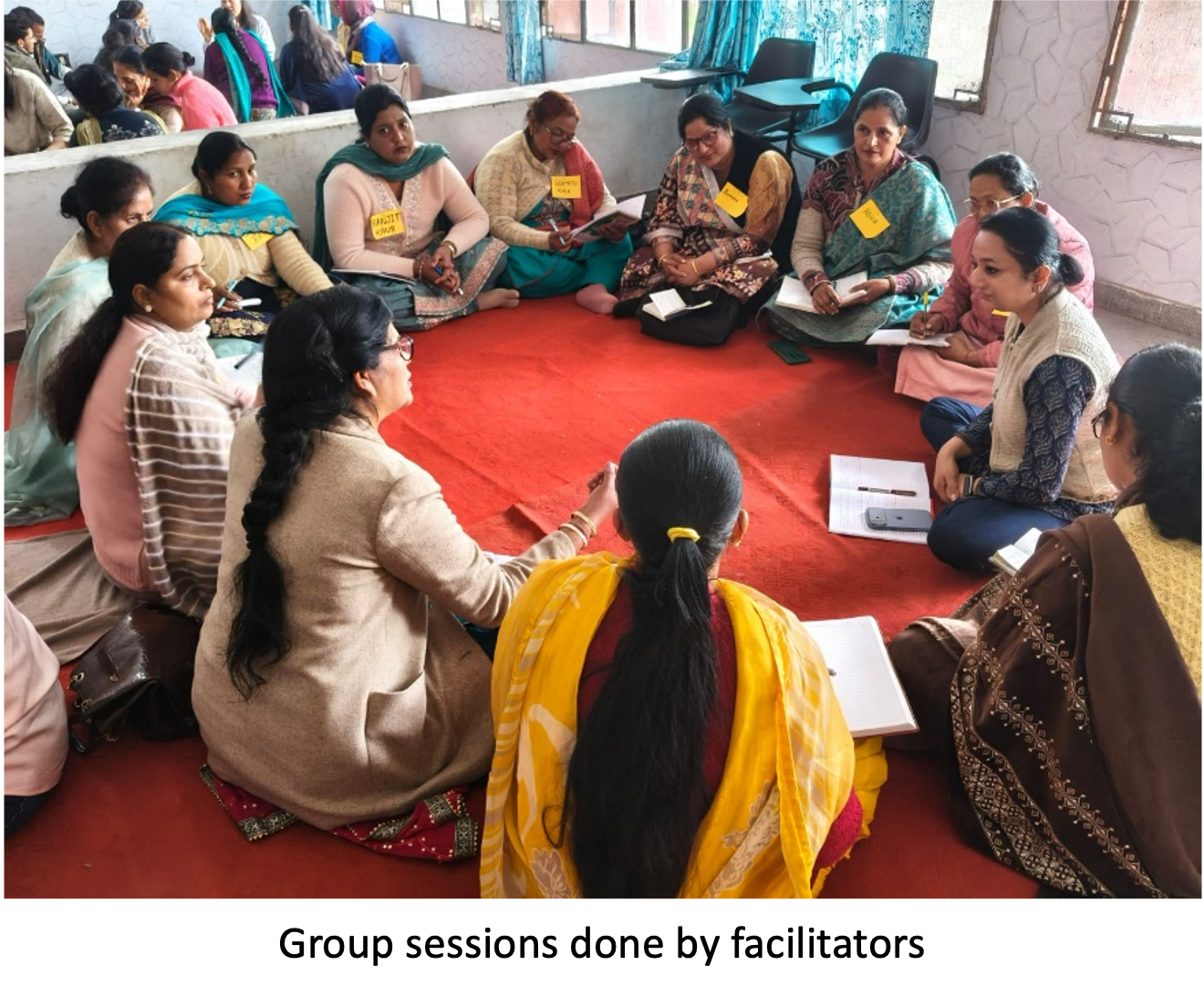
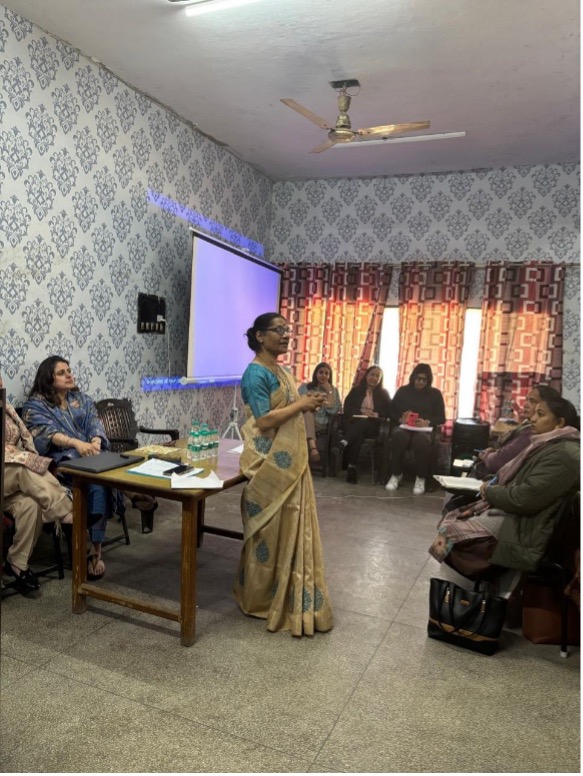
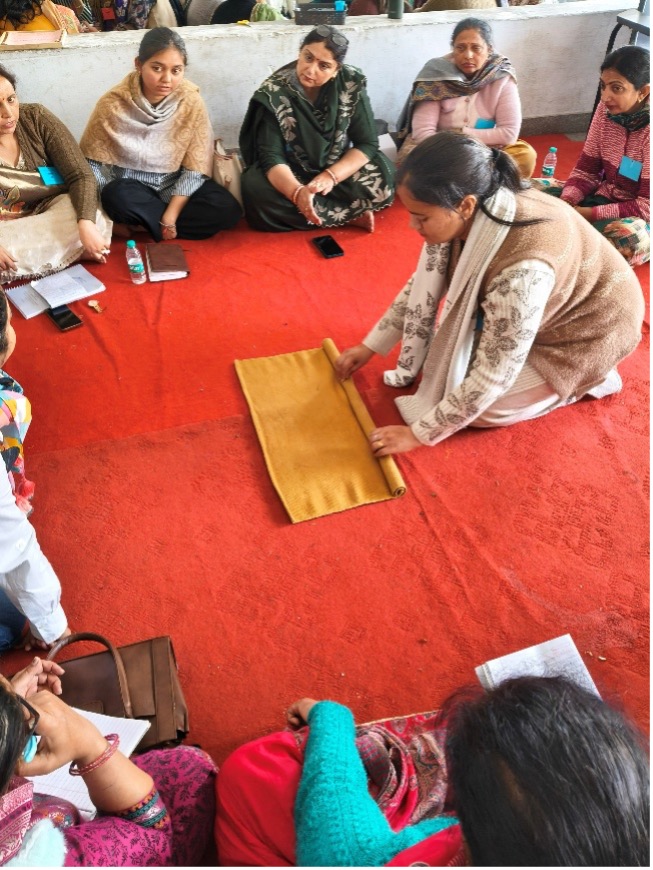
We finally started the first 2-week long module on 16 February 2026. I was with the batch supporting the work on the ground along with my committed facilitators. This was the first time that I was helping a class of almost 78- all of them teachers, some with almost 28 years of experience working. Many of them were post graduates some had two master degrees. For the initial 4 days, we were bogged down by administrative issues, sorting out the names, schools, and who represented whom. There were officials from the Education department coming in and out during class hours. Moreover, we had different teachers from the same class attending alternatively. They only cared about attendance and it took them time to understand why the same teacher needed to attend all days and all modules. Only by Thursday of the first week did we have an attendance register complete without any crosses and cuts. Personally, it was challenging to mainly deliver the course in Hindi rather than in English. As the participants could understand Hindi and Punjabi (mother Tongue) and most of them understood English, I did not require a translator.
The participants who attended were apprehensive in the beginning. They expected it to be like the many training courses that they had been attending over the years. In fact, many of them had been at the training centre attending another program just a few days before the commencement of our course. While they were receptive to what I said, they repeatedly expressed concerns about whether authorities would be supportive of changing things in the environment. We assured them that their concerns would be addressed.
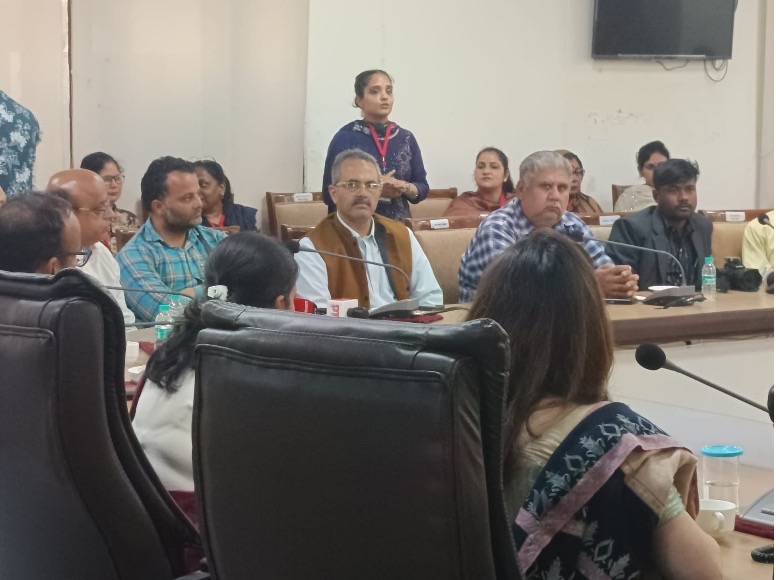
The Deputy Commissioner herself came to the centre a day before the first module ended. She wanted to hear from the participants what they learnt in the past 8 days and their thoughts on the training program. I was incredibly nervous at the surprise examination but it turns out that was not necessary. To mine and the facilitators surprise, many of them spoke how thad already begun making changes in their homes and personal lives based on the principles they had learned. They said that their perspective about the child had changed and that they intended to make changes in their classrooms accordingly. One gentleman even read a poem he wrote about Maria Montessori’s discovery of a beautiful philosophy through silent observation. She heard their views and encouraged them to submit a written document with their challenges and concerns so she could address their concerns.
We sincerely hope that they are able to implement the ideas that they have understood in their classrooms. Though the work is challenging and it is no small undertaking, it is a humbling and a rewarding experience.
Related resources
.jpeg)